Manual vs Automatic Translation: Which Works Better?
When deciding between manual and automatic translation, the choice boils down to your content’s complexity, deadlines, and budget. Here’s the quick answer:
- Manual translation is best for content needing high accuracy, subtle meaning, and context - like legal documents, marketing campaigns, or sensitive communications. It’s slower and more expensive but delivers precise results.
- Automatic translation is perfect for speed and scalability, especially for straightforward content like product descriptions, user manuals, or internal communications. It’s fast, affordable, but less reliable for nuanced or creative text.
Key Takeaways:
- Use manual translation for tasks requiring attention to tone, meaning, and industry-specific terminology.
- Opt for automatic translation when speed and cost are top priorities, but accuracy isn’t critical.
- Combine both methods (hybrid approach) for efficiency - machine-generated drafts refined by human expertise.
Quick Comparison Table:
| Factor | Manual Translation | Automatic Translation |
|---|---|---|
| Accuracy | High for complex or nuanced text | Suitable for simple content |
| Speed | Slower | Instant |
| Cost | Higher ($0.10–$0.30+ per word) | Lower (under $0.01 per word) |
| Best Use Cases | Legal, marketing, sensitive text | Product descriptions, manuals |
The best approach often depends on your goals. For large-scale projects, a hybrid method balances speed and quality effectively.
Auto Translate vs Manual Translate - Hotel Compendiums
What Is Manual Translation
Manual translation involves professional linguists converting content from one language to another while maintaining its meaning, tone, and cultural relevance. Unlike automated systems, human translators bring their contextual knowledge and cultural awareness into the process, ensuring that the final text resonates with the target audience.
These linguists rely on their expertise in both the source and target languages, including grammar, idiomatic expressions, and cultural nuances. This approach allows them to achieve an impressive 95-99% accuracy through their deep understanding of context.
"Human translation, on the other hand, relies on skilled linguists who bring cultural knowledge, contextual understanding, and creative interpretation to their work." - ASAP Translate
Manual translation is especially effective for projects that require precision and cultural adaptation. Industries like legal, medical, marketing, and technical fields often depend on human translators, as even minor errors in these areas can have serious consequences. Businesses also choose manual translation when they need complete control and oversight throughout the translation process.
Benefits of Manual Translation
Accuracy and contextual understanding are standout advantages of manual translation. Human translators go beyond simply replacing words - they interpret subtle meanings, implied messages, and the broader context, ensuring the translation aligns with the original tone and intent.
"In terms of translation quality, human translation excels in accuracy, fluency, and cultural adaptability due to human expertise and linguistic proficiency." - Youyou Lu, School of English Language and Culture, Xi'an Fanyi University
Creative adaptation is another strength. Professional translators can reimagine content to evoke the same emotional impact or response in the target language. This is especially important for marketing materials, where the goal is to inspire specific actions or emotions.
Specialized knowledge is critical for translating technical, legal, or medical documents. Many translators focus on specific industries, allowing them to use the correct terminology and convey complex ideas with precision.
SEO optimization improves when human translators tailor content to local search behaviors. By researching and integrating relevant keywords in the target language, they help businesses perform better in diverse markets.
Rigorous quality assurance ensures that manual translation avoids costly mistakes or cultural missteps. The process often includes multiple review stages, which guarantee consistency, accuracy, and sensitivity to the target audience.
What Is Automatic Translation
Automatic translation uses AI and machine learning, particularly neural machine translation (NMT), to convert text quickly and in a way that feels natural. These systems process massive amounts of multilingual data to identify patterns in grammar, language structure, and common phrases. Unlike the older rule-based methods that relied on predefined dictionaries to swap words, modern neural networks consider context and adapt translations based on the subject matter, making them far more advanced.
Today’s most popular automatic translation platforms handle billions of words daily across dozens of languages. They continuously improve through machine learning and feedback from users, making them faster and more accurate over time.
This efficiency makes automatic translation a go-to solution for tasks like website localization and real-time communication in international business. For example, e-commerce sites can instantly translate product descriptions, and social media platforms can help users connect across language barriers. These capabilities bring several clear advantages.
Benefits of Automatic Translation
- Speed: It processes massive amounts of text in record time, perfect for urgent or large-scale projects.
- Cost-effectiveness: Typically, it's far cheaper than hiring professional human translators.
- 24/7 Availability: Always accessible, no matter the time zone or holiday schedule - a must for global businesses.
- Consistency: Ensures uniform terminology across projects, especially useful for technical documents and branding.
- Scalability: Effortlessly handles large-scale translations, like entire websites or product catalogs, into multiple languages simultaneously.
While these benefits are impressive, automatic translation isn’t without its challenges. Understanding its limitations can help you decide when it’s the right tool for the job.
Drawbacks of Automatic Translation
Despite its strengths, automatic translation has notable limitations.
Accuracy issues are one of the biggest challenges. Complex sentences, specialized industry jargon, or less commonly spoken languages can trip up even the most advanced systems. The quality of translation often depends on the specific language pair and the complexity of the content.
Context gaps can result in translations that are technically correct but miss key nuances. Automatic systems often struggle with humor, idioms, or cultural references, making them less reliable for marketing or creative content where tone and emotion matter.
Cultural insensitivity is another risk. Machine translations don’t always account for local customs, values, or social norms. A phrase that works well in one language might come across as inappropriate or confusing in another if cultural context isn’t considered.
Limited creativity can also be a drawback. While a human translator might adapt a catchy slogan to resonate with a local audience, a machine-generated translation tends to be literal, which can sound clunky or awkward in certain contexts.
Inconsistent quality is another concern. Straightforward content like user manuals might translate well, but more nuanced texts - such as legal contracts or poetry - often require human intervention to ensure clarity and accuracy.
Manual vs Automatic Translation Comparison
Here's a direct comparison of manual and automatic translation to help you decide which method suits your needs. Each approach has its strengths, depending on your priorities.
Manual translation excels when precision, cultural understanding, and creative flexibility are essential. On the other hand, automatic translation stands out for its speed and affordability.
Context handling is a key area where these methods differ. Human translators can interpret subtle meanings and cultural nuances, making them ideal for complex or sensitive content. Meanwhile, automatic translation systems shine in maintaining consistency across large-scale projects, though they can sometimes overlook finer details. That said, advancements in automatic translation have improved its ability to handle context, albeit not perfectly.
Scalability is another major distinction. Automatic translation can process thousands of pages in minutes, making it a clear winner for large volumes. Manual translation, by contrast, requires significant coordination and time when dealing with similar workloads.
Side-by-Side Comparison Chart
| Factor | Manual Translation | Automatic Translation |
|---|---|---|
| Accuracy | High for nuanced, complex, or culturally sensitive content | Suitable for straightforward content; struggles with subtlety |
| Speed | Slower; large projects may take days or weeks | Almost instant, even for high volumes |
| Cost | High ($0.10-$0.30+ per word) | Low (under $0.01 per word) |
| Context Handling | Excellent for cultural and situational nuances | Limited; improving but misses subtle meanings |
| Scalability | Limited by human resources | Virtually unlimited; handles massive volumes simultaneously |
| Consistency | Can vary between translators | Highly consistent across projects |
| Availability | Restricted to working hours and translator schedules | Available 24/7 |
| Creative Adaptation | Perfect for marketing, slogans, and other creative content | Struggles; often too literal |
| Technical Content | Requires expert knowledge | Effective for standard technical documents |
| Best Use Cases | Legal documents, marketing materials, literature, sensitive communications | Website content, product descriptions, user manuals, real-time use |
| Quality Control | Relies on human expertise | Requires post-editing for critical content |
| Language Pairs | Quality depends on translator expertise | Best for common language pairs; quality varies otherwise |
The chart highlights that neither method is a one-size-fits-all solution. Manual translation is indispensable for tasks requiring cultural sensitivity, creativity, and high accuracy. Automatic translation, however, is unbeatable when speed and scale are the top priorities.
Ultimately, the choice depends on your specific content, deadlines, and quality expectations. This comparison also opens the door to hybrid strategies that leverage the best of both worlds.
sbb-itb-8482ffa
Combining Manual and Automatic Translation
Hybrid translation blends the efficiency of machine translation with the precision and creativity of human expertise. This approach leverages the strengths of both methods, making it a versatile solution for handling a wide range of content needs.
Why Hybrid Translation Works
Hybrid translation bridges the gap between speed and quality. Automated tools are great for handling repetitive or large-scale tasks - think product descriptions, navigation menus, or standard text - while human translators step in to refine language, adapt cultural nuances, and ensure the tone fits the context. The process typically involves machine translation followed by human post-editing, ensuring the final output is accurate, polished, and contextually appropriate. This method is especially effective for large-scale projects like technical manuals, e-commerce platforms, or complex websites, offering consistency and efficiency that purely manual approaches often struggle to match.
How Heylingo Enables Hybrid Translation
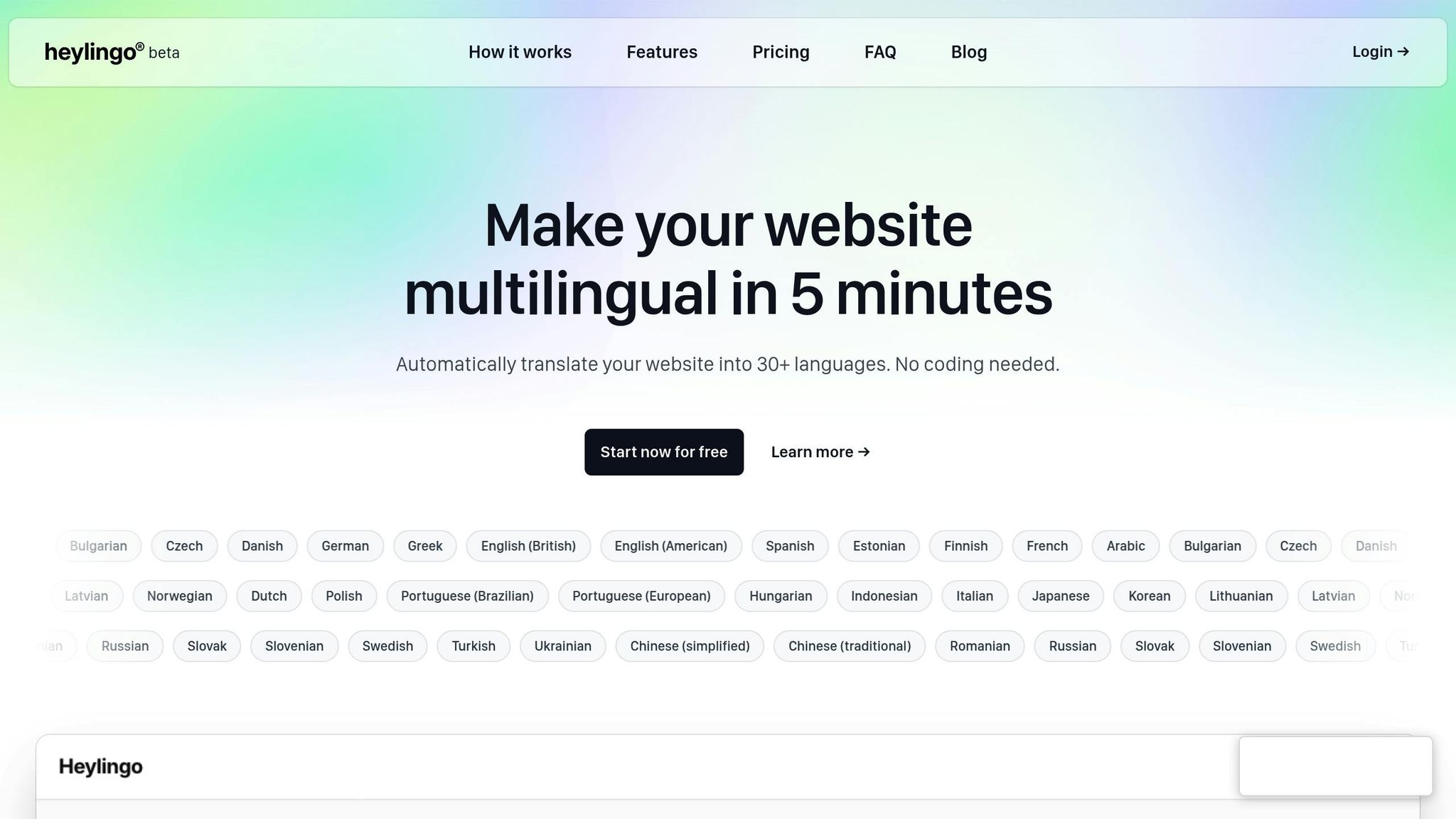
Heylingo makes hybrid translation simple and efficient. Its platform can instantly translate your website into over 30 languages, while also offering robust editing tools to tweak phrases, adjust for cultural nuances, or even rewrite sections entirely.
New content is automatically translated using a standardized framework that ensures consistent terminology and quality. From there, you can quickly review and make edits, with manual changes preserved even as content updates roll out.
Heylingo integrates seamlessly with major CMS platforms, Shopify, and custom websites through a lightweight script. It supports any tech stack, ensures GDPR compliance, and includes collaborative editing features for smooth global content delivery.
Plans start at $11 per month for the Starter option, with a character-based pricing model that ensures you only pay for the content you translate.
How to Choose the Right Translation Method
Choosing the right translation method is essential, as a poor decision can negatively affect user experience and harm your brand's reputation. To make the best choice, carefully evaluate your business goals and how they align with the various translation options. This section focuses on practical factors to consider when deciding.
Key Decision Factors
Content type and complexity should guide your choice. Different types of content require different approaches. For example, technical documents, legal contracts, and creative marketing materials each have unique demands. While straightforward product descriptions might be suitable for automatic translation, brand messaging often requires the nuance and cultural understanding that only human translators can provide.
Budget constraints are another critical aspect. Machine translation is generally more affordable than human translation, but the quality can vary significantly. It’s important to consider not just the upfront costs but also the potential risks of errors or miscommunications, which could lead to additional expenses down the line.
Time requirements often influence the decision. Automatic translation delivers results almost instantly, making it ideal for tight deadlines. In contrast, manual translation can take days or even weeks, depending on the scope of the project. If you're managing a simultaneous launch across multiple markets or need real-time updates, speed may outweigh other factors.
Cultural nuance and context are especially important for audience-facing content. While internal communications might prioritize speed over cultural precision, customer-facing materials must be carefully adapted to resonate with local audiences and avoid cultural missteps.
Volume and scalability matter for long-term planning. Translating a handful of pages manually might be manageable, but maintaining thousands of product pages in multiple languages requires a more systematic approach, often involving a mix of methods.
When to Use Each Method
Based on these factors, here’s a breakdown of when each method works best:
- Automatic translation is ideal for high-volume, lower-priority content. This includes internal communications, basic product specifications, user-generated content (like reviews), and real-time chat support. It’s fast and cost-effective for tasks where precision isn’t critical.
- Manual translation is the go-to for content that demands accuracy and cultural sensitivity. This includes legal documents, medical information, brand messaging, and high-stakes marketing campaigns. Industries like healthcare, legal, and finance often require human translation to meet compliance standards and ensure reliability.
- Hybrid translation combines the strengths of both methods. For example, machine translation can generate initial drafts for user manuals, technical documents, or marketing materials, which professional translators then refine for accuracy and cultural relevance. This approach is particularly useful for large-scale, time-sensitive projects where maintaining consistent terminology across multiple languages is essential.
Conclusion
Selecting the right translation method boils down to balancing speed and the need for cultural nuance, depending on your specific goals. Each method offers distinct advantages, making them useful in different contexts.
Automatic translation is ideal when speed and cost are top priorities. It's well-suited for tasks like internal communications, straightforward product descriptions, or any content where getting the gist across quickly matters more than fine-tuned precision. On the other hand, manual translation shines in scenarios where cultural context and accuracy are critical, such as brand messaging or legally sensitive documents.
The smartest approach often involves combining both methods. Using AI-powered translation for initial drafts and refining them with human expertise lets you achieve a balance between efficiency and quality. This hybrid model is especially useful for managing large volumes of content with varying quality demands, ensuring resources are allocated effectively to meet project needs.
When deciding, consider key factors like the type and complexity of your content, your budget, time constraints, cultural sensitivity, and the overall volume of work. For example, a technical manual might benefit from machine translation with light human editing, while a marketing campaign for a new international audience likely requires a fully human touch from the outset.
Platforms like Heylingo simplify this process by offering tools that cater to both rapid, cost-effective translation and detailed manual refinement. Supporting over 30 languages and integrating seamlessly with website platforms, Heylingo helps you implement a tailored translation strategy that aligns with your business goals. This flexibility ensures you can adapt your approach to fit the specific demands of each project.
Ultimately, the best translation method depends on your project’s unique requirements, quality standards, and priorities. Success lies in understanding the strengths of each approach and using flexible tools to deliver results that resonate with your global audience.
FAQs
How can I choose between manual and automatic translation for my project?
When deciding between manual and automatic translation, it's important to weigh your project's specific needs and priorities. Manual translation, handled by human professionals, excels in delivering precision, cultural sensitivity, and meticulous attention to detail. This makes it a top choice for tasks like marketing campaigns, legal contracts, or creative projects where nuance is key. On the flip side, it tends to be more expensive and time-consuming.
Automatic translation, driven by machine tools, offers speed and cost-efficiency. It's a practical solution for large-scale jobs, internal memos, or situations where quick turnaround times are essential.
For a balanced approach, you could combine the two: start with automatic translation for a rough draft, then have a human translator polish it to ensure quality and accuracy.
Ultimately, your choice should align with your goals, budget, and deadlines.
What makes automatic translation challenging for creative or nuanced content?
When it comes to automatic translation, it often falls short in capturing the tone, emotional depth, and context tied to culture - elements that are crucial for more nuanced or creative content. While these tools do a decent job with straightforward text, they tend to struggle with idiomatic phrases, regional slang, or subtle cultural cues. The result? Translations that can feel lifeless or even miss the mark entirely.
Another challenge is their inability to fully understand the layers of meaning in creative works. Humor, metaphors, and clever wordplay often get lost in translation, leaving you with text that might be technically accurate but lacks the intended emotional or intellectual punch. This can water down your message or even create a disconnect with your audience.
Can combining human and machine translation improve the quality and speed of my projects?
Combining human and machine translation can boost both the quality and speed of translating content. This approach leverages machine translation for fast initial drafts, followed by human expertise to polish the text, ensuring it’s accurate, culturally appropriate, and reads naturally.
Known as Machine Translation Post-Editing (MTPE), this method works particularly well for large-scale projects, marketing campaigns, or tasks with tight deadlines. It strikes a balance between efficiency and precision, making it a smart choice for businesses looking to localize content without compromising on quality.