Tracking Localization ROI: Key Engagement Metrics
When you invest in translating your website, how do you measure success? Localization ROI shows how adapting content for different languages leads to revenue growth, cost savings, and market expansion. Here’s what you need to know:
- Localization pays off: A SaaS company spent $81,800 on translations and earned $670,000 in revenue, achieving an 820% ROI in one year.
- Engagement improves: Localized content reduces bounce rates by 20–40% and boosts conversion rates by 70–200%.
- It’s about more than revenue: Support tickets drop 67% when users interact with localized platforms.
Key metrics like traffic, session duration, bounce rate, and conversion rates help track localization success. Tools like Google Analytics 4 and Heylingo simplify this process, making it possible for businesses to expand globally while tracking measurable results. Localization isn’t just a cost - it’s a growth strategy.
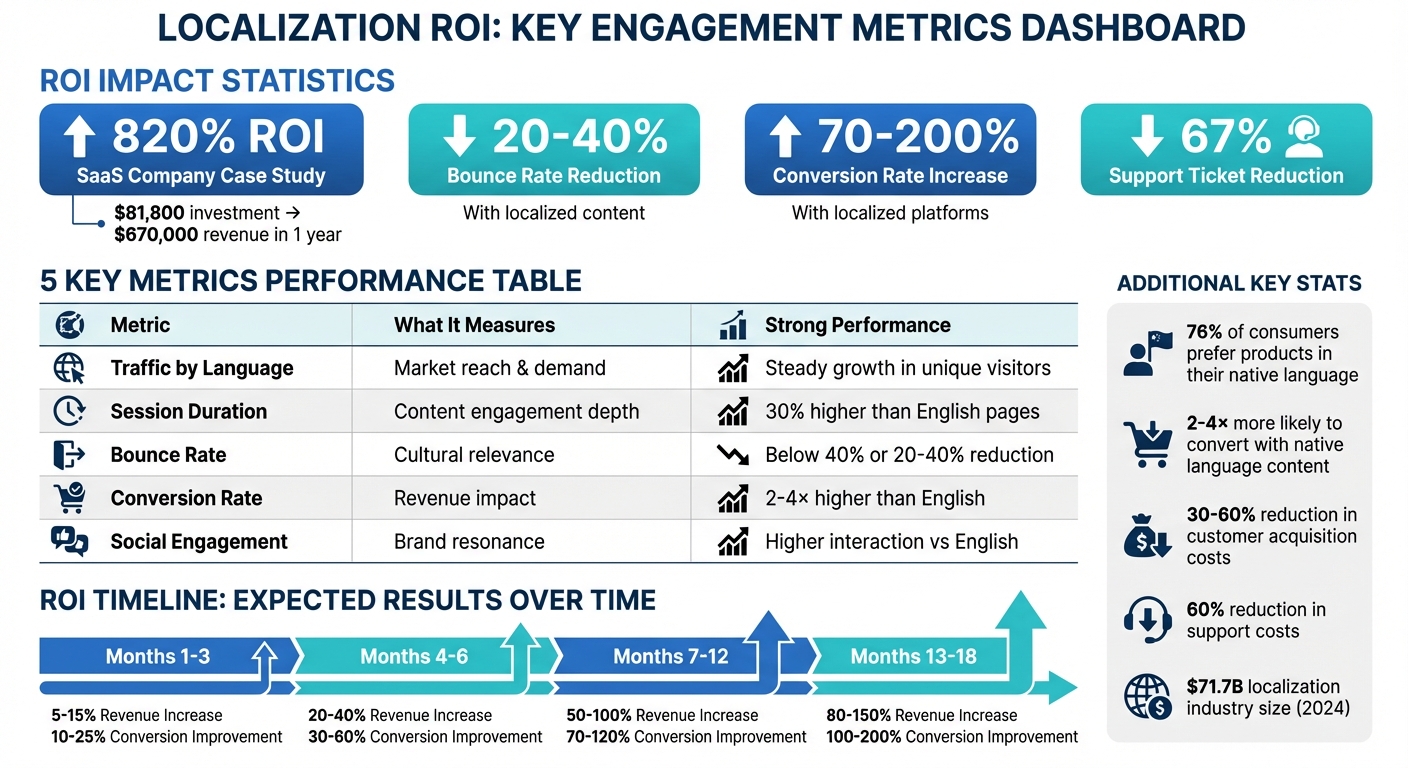
Localization ROI Key Metrics and Performance Benchmarks
Measuring ROI - Return on Localization Investment - Nimdzi LIVE! feat. Miguel Sepulveda
sbb-itb-8482ffa
Key Engagement Metrics to Measure Localization ROI
Tracking the right metrics turns localization into a measurable growth strategy. These engagement metrics help you understand how well your translated content resonates with global audiences and where your investment delivers results. Let’s break down the key metrics that reflect the true impact of localization.
Website Traffic by Language and Region
Start by measuring unique page views and organic traffic from each target country after localizing your website. Tools like Google Analytics 4 let you create a custom dimension for "Language", making it easier to segment traffic by region. You can also use UTM tags (e.g., utm_campaign=spanish-localization) to directly link traffic increases to your localization efforts.
But traffic alone isn’t the whole story - how deeply users engage matters just as much.
Session Duration and Pages per Session
If visitors are spending more time on your site or exploring more pages, it’s a good sign they’re connecting with your content. Compare these metrics on English pages versus localized ones. When localized pages show longer session durations or higher pages per session, it’s clear that language barriers are being removed, allowing users to engage more fully with your content.
Bounce Rate on Localized Pages
A drop in bounce rate - ideally between 20% and 40% - after localization is a strong indicator that your content is culturally relevant. Bounce rates below 40% are considered excellent performance. Often, high bounce rates on English pages from non-English-speaking markets reflect a language disconnect rather than a lack of interest.
For example, when John Smedley localized its e-commerce site for French customers in March 2025, conversion rates jumped by an impressive 230%. This success stemmed from reducing bounce rates through culturally adapted content, not simply translating word for word.
"High bounce rates on a specific language version of a page might indicate a poor translation or a cultural mismatch." - Translated
Conversion Rates in Target Languages
Conversion rates are a direct link between localization and revenue. Track how many users complete purchases, sign-ups, or downloads on localized pages. Effective localization can boost conversion rates by 70% to 200% compared to English-only versions. Research shows that users are two to four times more likely to convert when engaging with content in their native language. Use GA4 to monitor conversions by language and pinpoint which translations are driving the most revenue. If a localized checkout page outperforms its English version, it highlights the financial payoff of your localization strategy.
Social Media Engagement by Language
Social media metrics like shares, mentions, and interactions by language reveal how well your brand resonates globally. For instance, NordVPN’s localized strategy across 24 regions in 2026 resulted in significant sales growth, thanks to detailed performance analysis. Comparing engagement on localized posts versus directly translated English ones can help you identify markets that are thriving - and those that might need further refinement.
| Metric | Key Insights | Strong Performance Benchmark |
|---|---|---|
| Traffic by Language | Market reach and demand | Steady growth in unique visitors |
| Session Duration | Content engagement depth | 30% higher than English pages |
| Bounce Rate | Cultural relevance | Below 40% or a 20–40% reduction |
| Conversion Rate | Revenue impact | 2–4 times higher than English |
| Social Engagement | Brand resonance | Higher interaction rates than English content |
How Culture Affects Engagement Metrics
Translation may deliver the words, but cultural adaptation delivers the meaning. When brands align with local consumer habits, preferences, and communication styles, engagement metrics can see a dramatic boost. In fact, businesses that go beyond basic translation to embrace cultural adaptation report conversion rates that are 2–3 times higher.
Take communication styles, for example. High-context cultures like Japan and Korea often prefer indirect messaging and relationship-focused interactions. On the other hand, low-context cultures, such as Germany and the U.S., lean toward direct, fact-based communication. Even trust signals differ: Western consumers tend to rely on peer reviews, while many Asian customers place more value on expert endorsements or a brand’s heritage. Visual elements also carry different meanings - white, which symbolizes purity in the West, is often associated with mourning in parts of Asia. These nuances matter. By addressing them, brands not only build trust but also see measurable improvements in user engagement.
"When you speak to consumers in their language and cultural context, you're building trust, demonstrating respect, and removing friction from the buying journey."
- Corinne Sharabi, Social Media and Content Lead, BLEND
Tracking Engagement Improvements Through Local Adaptation
Tailoring content to local preferences goes far beyond translation - it’s about creating a truly native experience. This approach has a direct impact on key engagement metrics like session duration, bounce rates, and conversions. Localized marketing campaigns, for instance, can achieve conversion rates up to 6 times higher than non-localized efforts.
Let’s look at some numbers: In Japan, users spend an average of 3 minutes and 50 seconds on culturally adapted pages, compared to just 2 minutes and 20 seconds in the U.S. Bounce rates also tell a story - 45% in Japan versus 48% in the U.S. After implementing cultural adaptations, bounce rates typically drop by 15–30% within the first three months. Between months 4 and 6, time on site often increases by 25–40%, and by the 7–12 month mark, overall engagement metrics can improve by 35–50%. This isn’t just about translating words; it’s about designing an experience that feels authentic and intuitive.
Measuring Support Ticket Trends by Language
Localization doesn’t just enhance engagement - it can also streamline customer support. For instance, a high volume of "how-to" support tickets often signals that the user interface or messaging isn’t clear enough for a specific audience. Addressing these cultural gaps can reduce support costs by up to 60%.
"Clear and culturally appropriate communication is key to minimizing misunderstandings and resolving queries efficiently."
- XTM Cloud
AI-powered chatbots add another layer of efficiency. By offering 24/7 assistance in native languages, they eliminate the need for large, dedicated local support teams while still improving customer satisfaction. To track the success of your localization efforts, monitor support ticket trends monthly. A drop in ticket volume suggests that your cultural adaptations are working. If ticket numbers remain high or increase, it’s time to dig deeper into the reported issues to identify areas for improvement.
Using Engagement Data to Improve ROI
To get the most out of your localization efforts, leveraging engagement data is key. The best results come when localization is treated as a continuous process, not just a one-and-done project. By regularly testing, analyzing, and fine-tuning based on how users interact with your localized content, you can turn your initial investment into ongoing returns.
One effective approach is to use A/B testing to pinpoint what resonates most with your audience.
A/B Testing Localized Content
A/B testing helps you figure out which localized elements drive the best engagement and conversions. Instead of guessing, you can test variations - headlines, CTAs, product descriptions, or even visuals - to see what works.
For example, you could experiment with different headline styles or adjust the placement of CTAs to find the combination that delivers better results. Focus these efforts on high-traffic areas like landing pages, product pages, or checkout flows. These areas tend to deliver faster returns, often improving ROI 30–40% more quickly.
Connecting Engagement Metrics to Revenue
While metrics like bounce rate and session duration are useful, the ultimate goal is revenue growth. To demonstrate the ROI of localization, you need to link improvements in engagement to financial outcomes.
Start by setting up geographic segmentation in your analytics platform to track revenue, average order value (AOV), and customer lifetime value (CLV) by language and region. Use UTM parameters to attribute conversions to specific markets more accurately. Then, compare pre- and post-localization revenue for each region.
A simple tracking table can make this process easier. Include columns for key engagement metrics (like bounce rate, time on site, and conversion rate), localization costs, and revenue. This setup allows you to quickly identify trends and calculate ROI. Generally, localization pays off within 12–18 months, with conversion rates improving by 10–25% in the first three months, and potentially reaching 100–200% by months 13–18.
| Timeframe | Expected Revenue Increase | Expected Conversion Improvement |
|---|---|---|
| Months 1–3 | 5–15% | 10–25% |
| Months 4–6 | 20–40% | 30–60% |
| Months 7–12 | 50–100% | 70–120% |
| Months 13–18 | 80–150% | 100–200% |
Don’t overlook the indirect benefits of localization. For example, it can reduce support ticket volume from 1.2 tickets per user annually to just 0.4. It can also lower customer acquisition costs by 30–60% and save 30–50% on translation costs thanks to translation memory tools.
Given the complexity of managing ongoing improvements, tools designed for seamless localization can simplify the process.
Using Heylingo to Simplify Localization
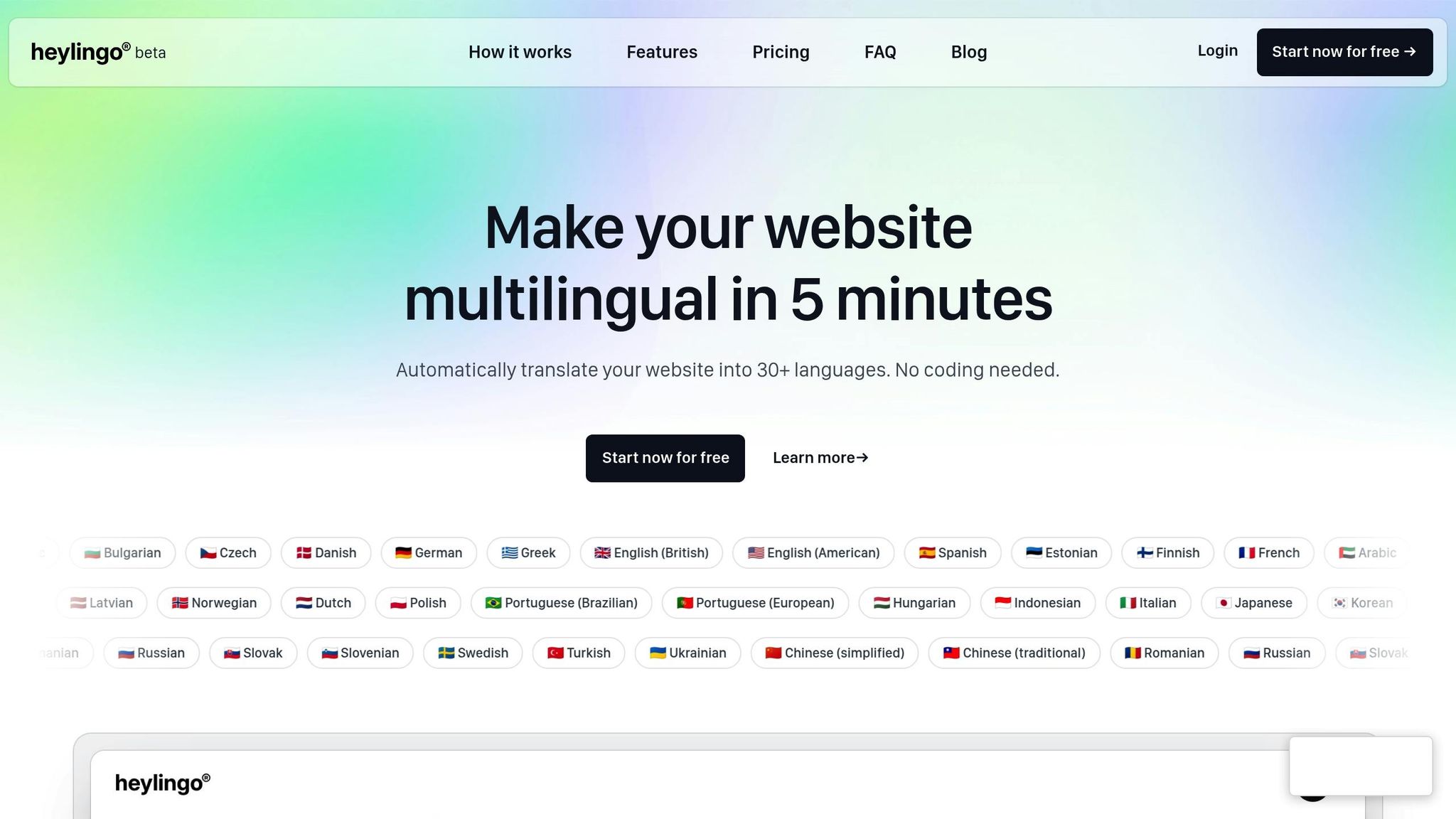
Handling localization across multiple regions can get tricky, but Heylingo makes it easier. This platform automates translations while giving you control over quality and local relevance.
Heylingo can translate your website into over 30 languages in just five minutes. It integrates smoothly with any CMS, custom platform, or e-commerce system, including Shopify through a dedicated plugin. Plus, translations are delivered via a fast CDN, ensuring that your localized pages load quickly - something that’s critical for reducing bounce rates and keeping users engaged.
The platform’s manual editing dashboard allows you to refine automated translations to better match your audience. This feature is especially handy for testing different messaging styles, adjusting CTAs, or tweaking content based on A/B test results - all within one user-friendly interface.
Heylingo also supports real-time updates, so you can quickly respond to performance data. If a headline or product description isn’t connecting with a specific market, you can change it immediately without waiting for a new translation cycle. This flexibility is particularly useful in the first 6–12 months as you fine-tune your localization strategy.
With pricing starting at just $10/month, Heylingo offers a cost-effective alternative to traditional translation services, which typically charge $0.08–$0.25 per word. This not only cuts costs but also speeds up your ability to optimize and boost localization ROI.
Conclusion
Tracking engagement metrics can turn localization into a powerful revenue generator. Research shows that 76% of consumers prefer products in their native language, and businesses that invest in translation often see revenue growth of up to 1.5×. This approach gives growing businesses a distinct edge over those that remain stagnant.
The secret lies in treating localization as an ongoing effort, not a one-and-done task. By analyzing engagement data, you can zero in on thriving markets and uncover areas that need improvement. Experimenting with region-specific headlines and calls-to-action can reveal what resonates most with audiences. And when you tie these efforts directly to revenue, it becomes easier to prove ROI to stakeholders. Many localization investments show measurable returns within 12–18 months, with conversion rates often improving noticeably within just a few months.
Heylingo simplifies this process, enabling businesses to translate your website and launch multilingual content in minutes. With real-time performance adjustments and pricing starting at just $10 per month, it offers an affordable way to break into new markets without the complexity of traditional translation services. This efficiency is especially important as the market continues to grow.
The localization industry hit $71.7 billion in 2024 and is projected to grow to $75.7 billion by 2025. This trend highlights an important shift: speaking your customers’ language isn’t optional - it’s essential for global success. Start tracking your engagement metrics now, and use those insights to craft a localization strategy that delivers measurable growth.
FAQs
How can I measure the ROI of my website localization efforts effectively?
To gauge the success of your website localization efforts, it’s important to track both quantitative and qualitative metrics that align with your goals. Look at numbers like revenue growth in localized markets, customer acquisition rates, and engagement stats such as time spent on the site, bounce rates, and user feedback. Also, keep an eye on organic traffic, lead generation, and customer satisfaction in your target regions to understand how well your localization strategy resonates with local audiences.
When calculating ROI, use this formula: ROI = (Net Benefits – Localization Costs) / Localization Costs × 100. Net benefits could include increased revenue or cost savings that are directly tied to your localization efforts. By analyzing these metrics, you’ll gain a clear picture of the value localization brings, ensuring you can justify your investment and fine-tune your strategy for better results.
Tools like Heylingo can streamline the process by enabling you to make your website multilingual in just minutes, helping you break into new markets efficiently.
What are the most important engagement metrics to measure localization success?
To gauge how well your website localization is working, keep an eye on key engagement metrics that reveal how users interact with your site and how satisfied they are. Here’s what to monitor:
- Bounce rate: A lower bounce rate on your localized pages suggests that visitors find the content relevant and worth exploring.
- Time on page: If users are spending more time on your localized pages, it’s a sign they’re engaging with your content.
- Conversion rates: Measure how effectively your localized content turns visitors into customers or leads.
- Repeat visits: Returning visitors indicate your localized site is meeting their expectations and needs.
- Social shares: When users share your content, it’s a clear sign it resonates with the local audience.
By digging into these metrics, you’ll get a clearer picture of how well your localization is connecting with your target audience and driving results. Tools like Heylingo can make this process easier by helping you localize your website into over 30 languages, creating a tailored experience for your global visitors.
How does cultural adaptation improve localization results?
Cultural adaptation is key to making your localization efforts resonate with your target audience. It goes beyond just translating words - it’s about weaving in local customs, preferences, and societal norms to ensure your content feels genuine and relatable. This deeper connection not only builds trust but also encourages users to engage with your content in a more meaningful way.
When your content aligns with the cultural expectations of your audience, the benefits are clear. It can lead to higher conversion rates, improved customer satisfaction, and ultimately, a stronger return on investment. A website or product tailored to local sensibilities makes international users feel seen and valued, increasing the likelihood that they’ll stick around and become loyal customers.
In essence, cultural adaptation turns localization into more than just a technical process - it becomes a strategy for fostering growth and building lasting relationships with audiences across the globe.